
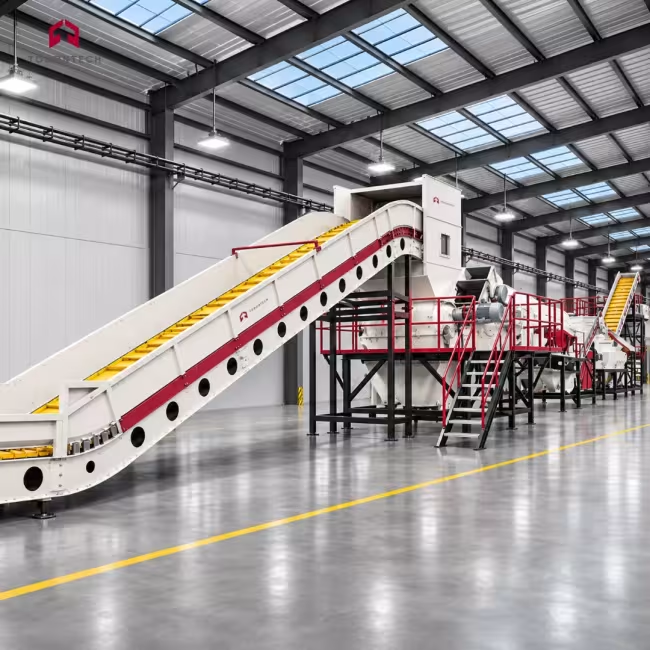
PET Bottle Washing Line - ToronPR™ PWL PET Series
PET Bottle Washing and Recycling Line with Label Remover and Hot Washer
The PET bottle washing line turns baled post-consumer bottles into clean, dry PET flakes ready for fiber, strapping, sheet, or bottle production. Recyclers, reclaimers, and polyester converters use it to process beverage and water bottles collected through curbside and deposit programs. The ToronPR™ PWL PET handles every step after the bale arrives: de-baling, pre-cleaning, label removal, sorting, crushing, hot washing, rinsing, drying, and label separation. Five standard configurations deliver 300, 500, 1,000, 2,000, and 3,000 kg/h of flake.
Bottle quality varies widely between suppliers and regions, and each end market sets its own flake purity target. Torontech configures every PET recycling line around those two factors, adjusting crusher selection, washing stages, and sorting steps to match. Plants producing fiber can run a leaner configuration, while sheet and bottle-grade producers typically add washing and separation capacity. A water treatment system lets the line reuse process water, and steam supplies the heat for the hot washing stage.
PET Bottle Washing Line - ToronPR™ PWL PET Series Applications
This PET flake washing line serves operations that receive used PET bottles and sell or reuse clean flake.
- Post-Consumer Bottle Recycling: processes baled beverage, water, and soda bottles collected through curbside and retail recycling programs
- Deposit Return Program Material: cleans the relatively uniform bottle stream recovered through bottle bill and reverse vending systems
- Polyester Staple Fiber Production: supplies washed flake to fiber spinners making carpet, insulation, nonwovens, and textile fiber
- PET Strapping Manufacturing: provides flake for extruded polyester strapping used in pallet and bale securing
- PET Sheet and Thermoforming: delivers flake for sheet extrusion feeding thermoformed trays, clamshells, and blister packs
- Bottle-to-Bottle Recycling Feedstock: produces washed flake as the first stage before further decontamination for new bottle production
- Material Recovery Facilities: adds value to the sorted PET fraction by converting bales into washed flake on site
PET Bottle Washing Line - ToronPR™ PWL PET Series Key Features
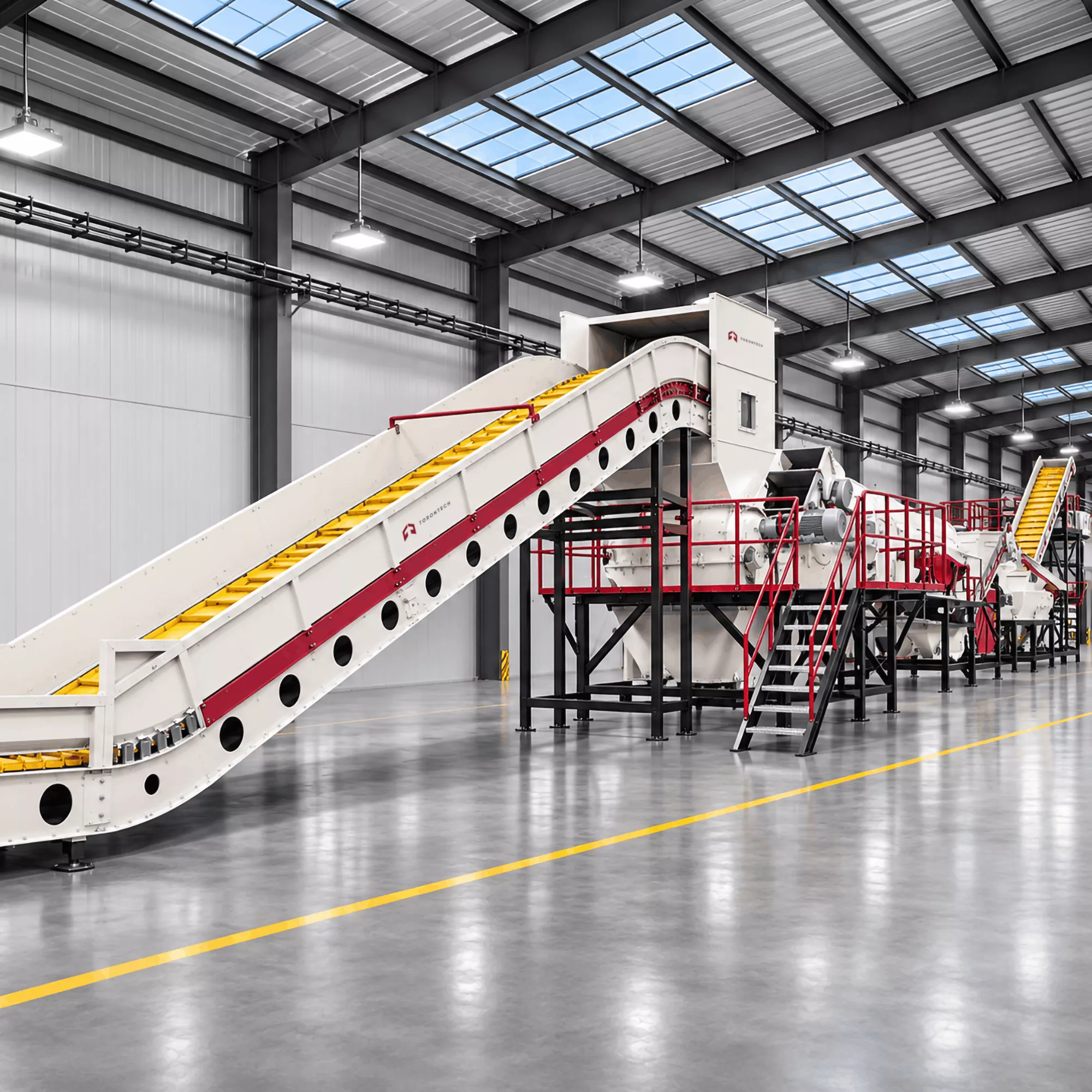
The line covers the full route between a compressed bale and a bin of washed flake, with each stage matched to the customer's bottle supply and purity target.
- Bale-to-Flake Processing: de-baling, pre-cleaning, sorting, washing, and drying run as one connected line with no manual transfer between stages
- High Label Removal Rate: the label remover strips 90 to 98% of PVC labels while bottles are still whole, before they reach the crusher
- Adjustable Flake Size: swapping the crusher's outlet sieve mesh changes flake size to suit fiber, sheet, or strapping customers
- 90 to 95 °C Hot Washing: heated caustic or detergent washing removes oil, glue, and residue that cold washing cannot clear
- Two-Stage Contaminant Separation: water flotation removes caps and floating labels, and air classification removes remaining label fragments and dust
- Manual Quality Control Station: a sorting belt lets workers pull PVC bottles and foreign objects before crushing
- Crusher Blade Protection: a metal detector on the sorting belt alarms before metal can reach the cutting chamber
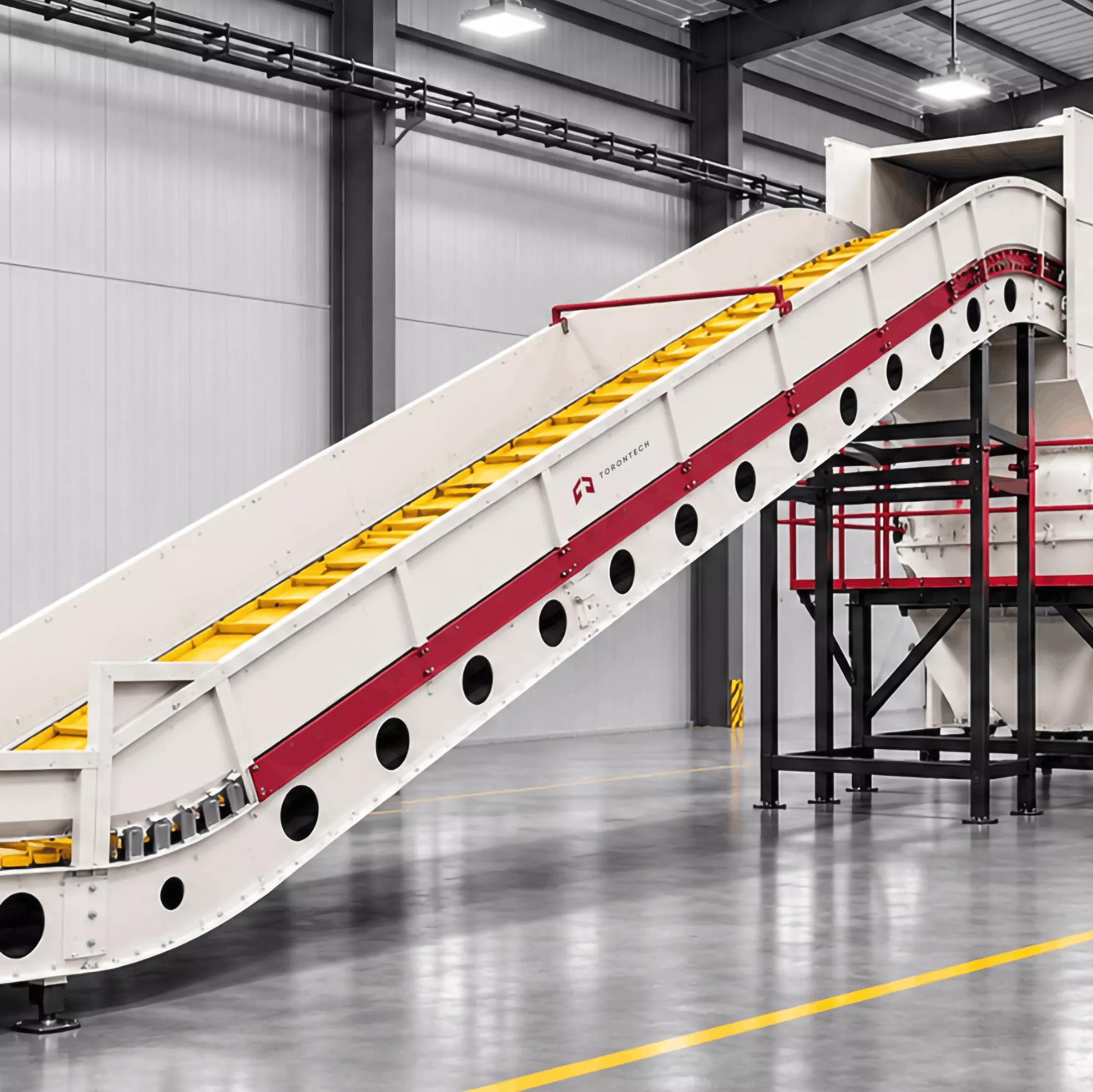
- Forklift-Friendly Bale Infeed: lines of 1,000 kg/h and above use a partly below-ground metal chain conveyor that forklifts can load directly
- Recycled Water Operation: an optional water treatment system lets the line reuse process water and cut fresh water demand
- Five Capacity Options: standard configurations span 300 kg/h through 3,000 kg/h of flake output
Main Machine Units
Each ToronPR™ PWL PET line is customized, so the exact unit list varies by project. The units below cover a complete bale-to-flake configuration.
Metal Chain Conveyor
The metal chain conveyor feeds baled bottles into the de-baler on lines rated at 1,000 kg/h or more. Part of the conveyor sits below floor level, so forklift operators can push bales straight onto it. Its steel chain belt resists damage when metal strapping wire drops onto the conveyor during unloading. This setup speeds bale handling and keeps the infeed running steadily at high throughput.
De-Baler
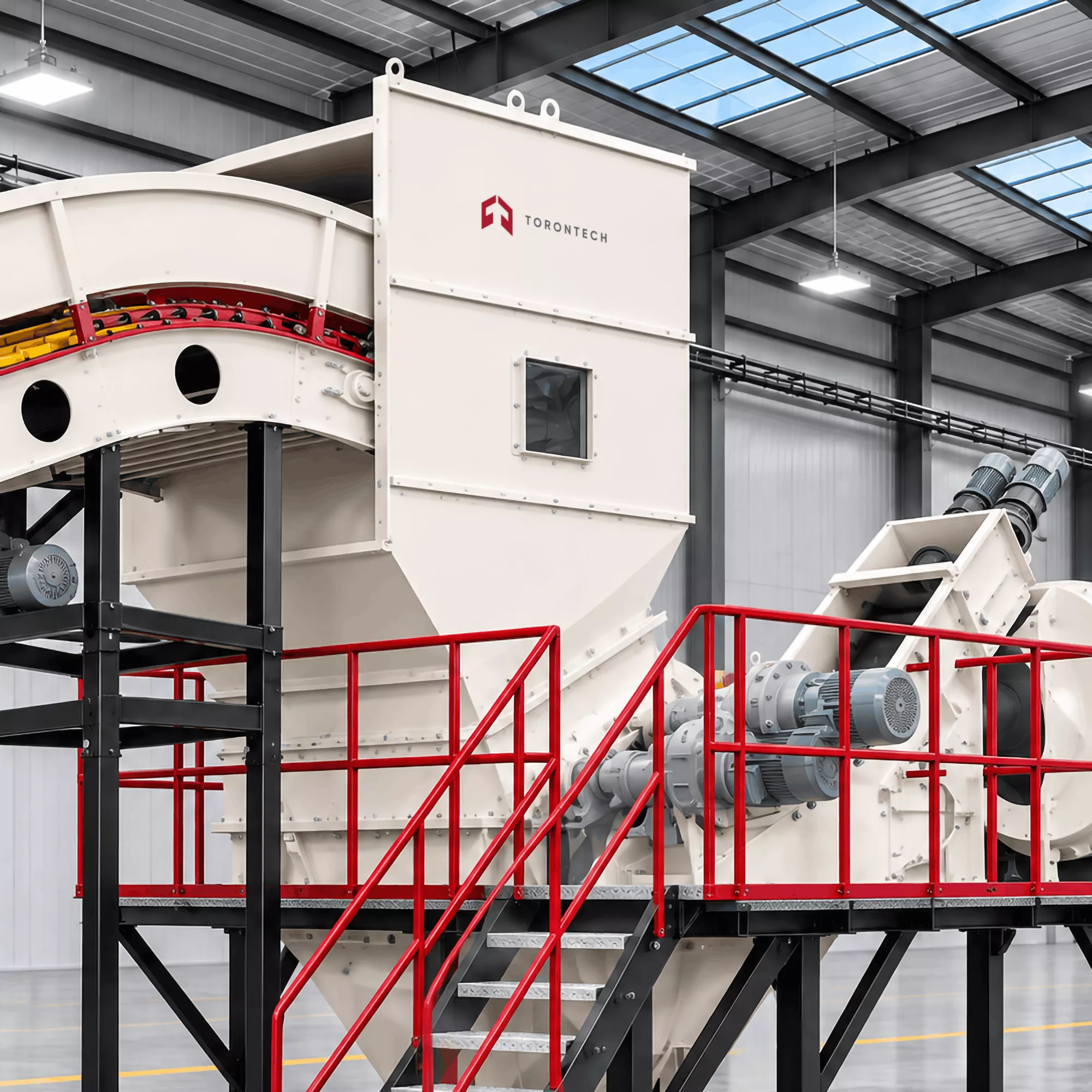
The de-baler breaks compressed bales apart so individual bottles flow freely into the next machine. Rotating shafts tear the bale open without crushing the bottles, which keeps them whole for label removal. Loose bottles travel downstream at a steady rate instead of arriving in large clumps. This even flow lets the trommel and label remover work at full efficiency.
Trommel
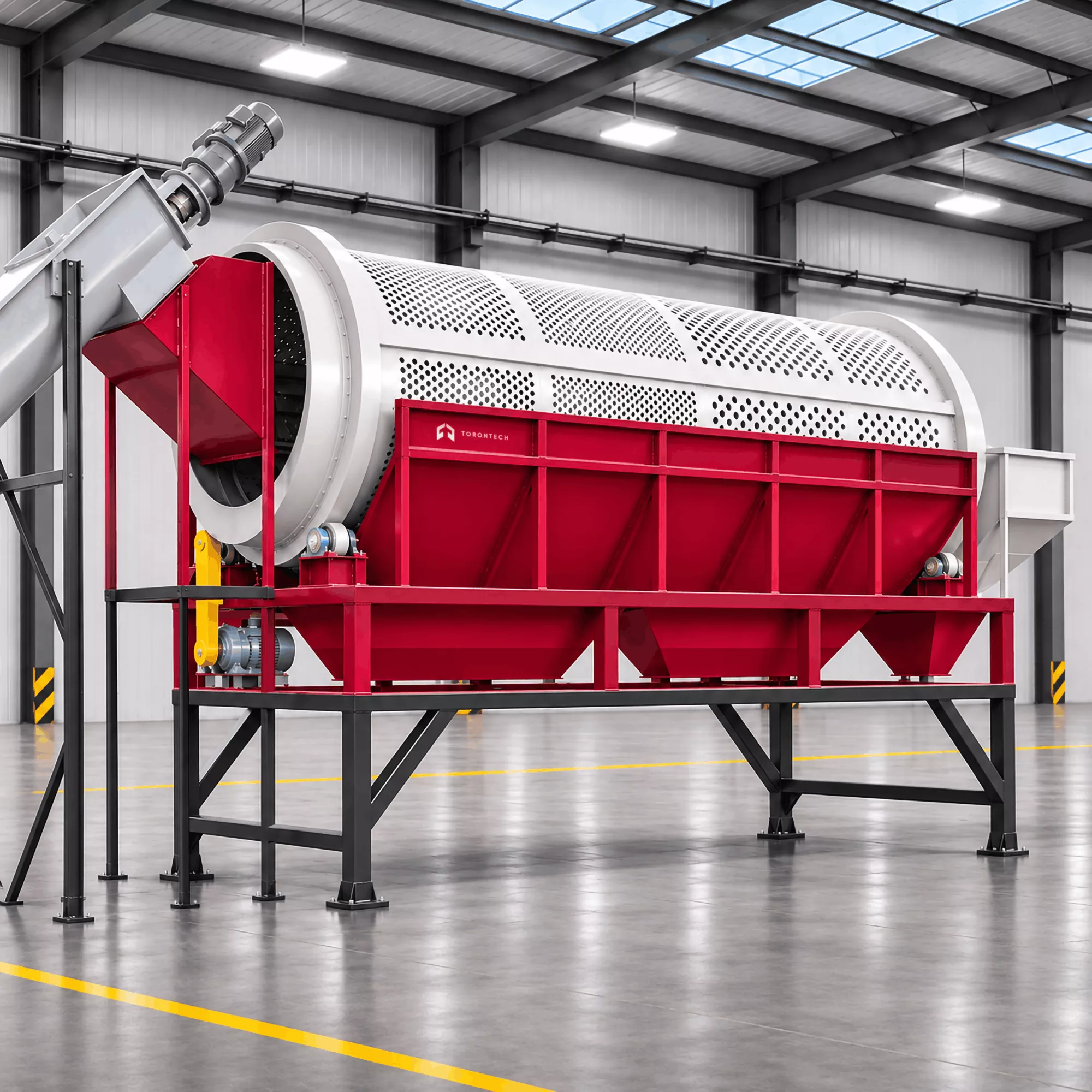
The trommel pre-cleans bottles before any washing begins. A perforated barrel rotates slowly, tumbling the bottles as they move along its length. Sand, gravel, broken glass, and other small surface impurities fall out through the holes. Removing this abrasive debris early protects the label remover and crusher blades from excess wear.
Label Remover
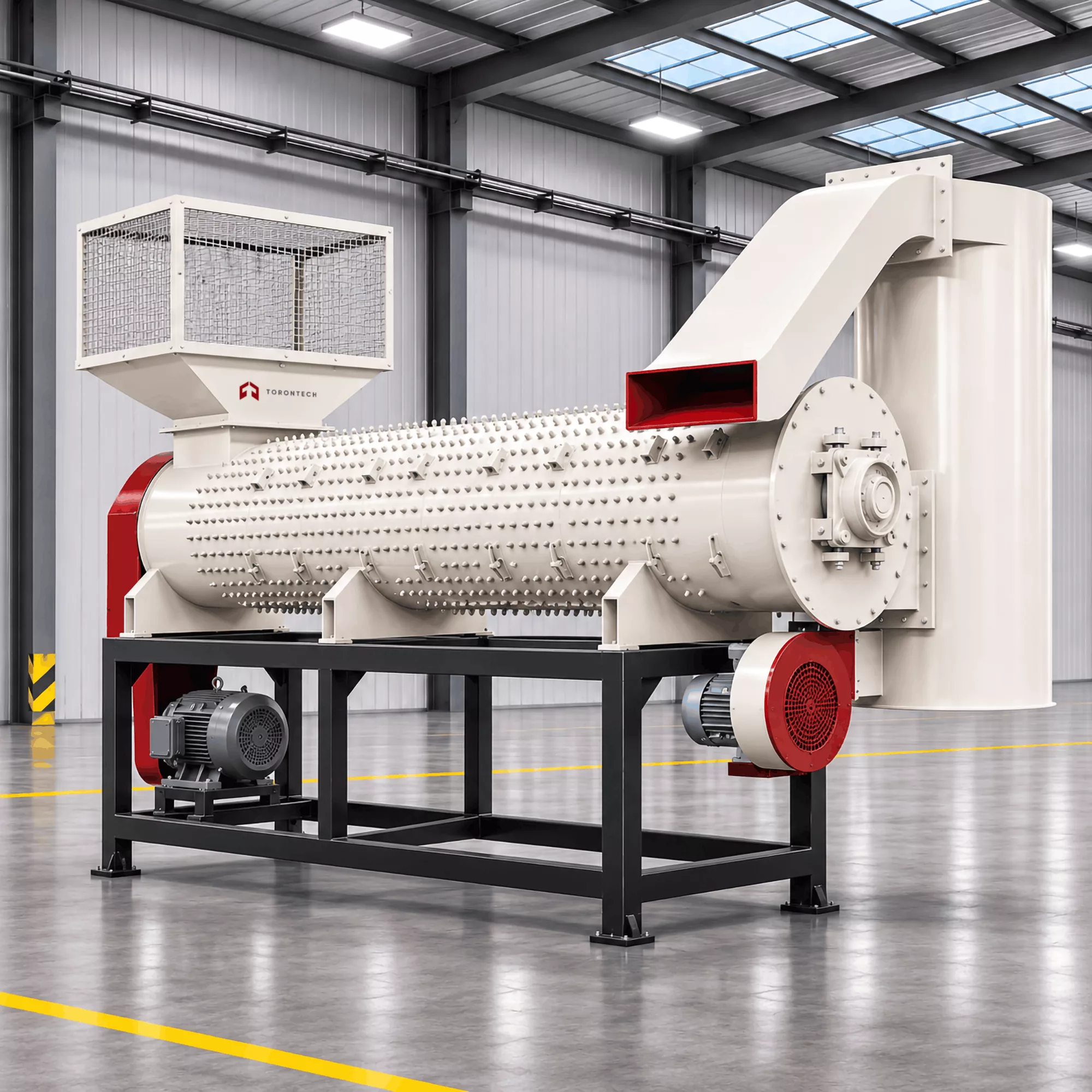
The label remover strips labels from whole bottles before they are crushed. Rotating paddles inside the drum rub bottles against each other and the housing PVC labels. The machine removes 90 to 98% of PVC labels, which reduces the load on every downstream separation stage. Pulling PVC out early matters because even small amounts can degrade PET during later melt processing.
Manual Sorting Belt with Metal Detector
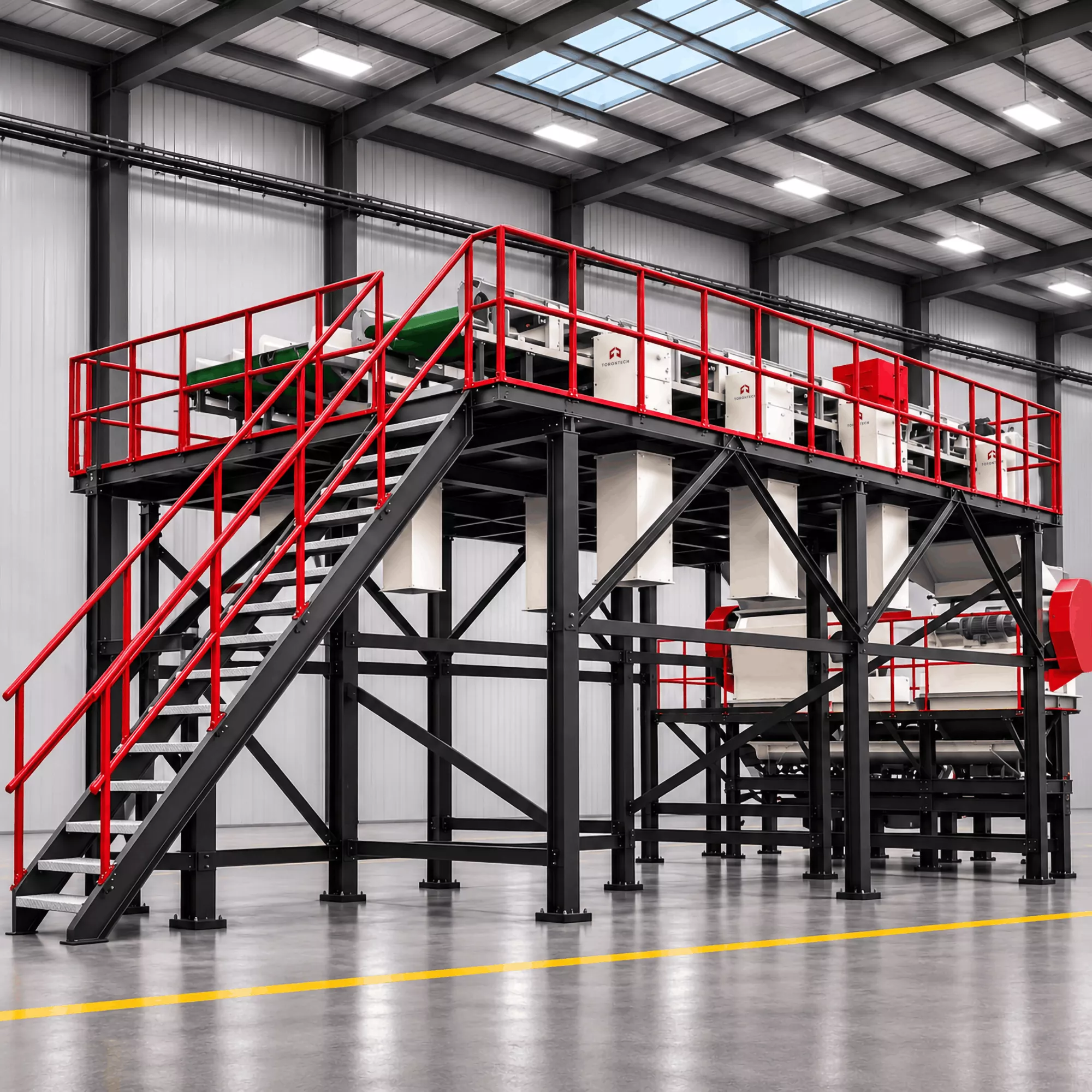
The manual sorting belt gives workers a final chance to inspect bottles before size reduction. Operators along the belt pick out PVC bottles, stray labels, and other foreign objects by hand. A metal detector sounds an alarm when metal passes, so it can be removed before reaching the crusher. An optional steel sorting table gives workers a stable, easy-to-clean platform.
Wet Granulator/Crusher (with Water)
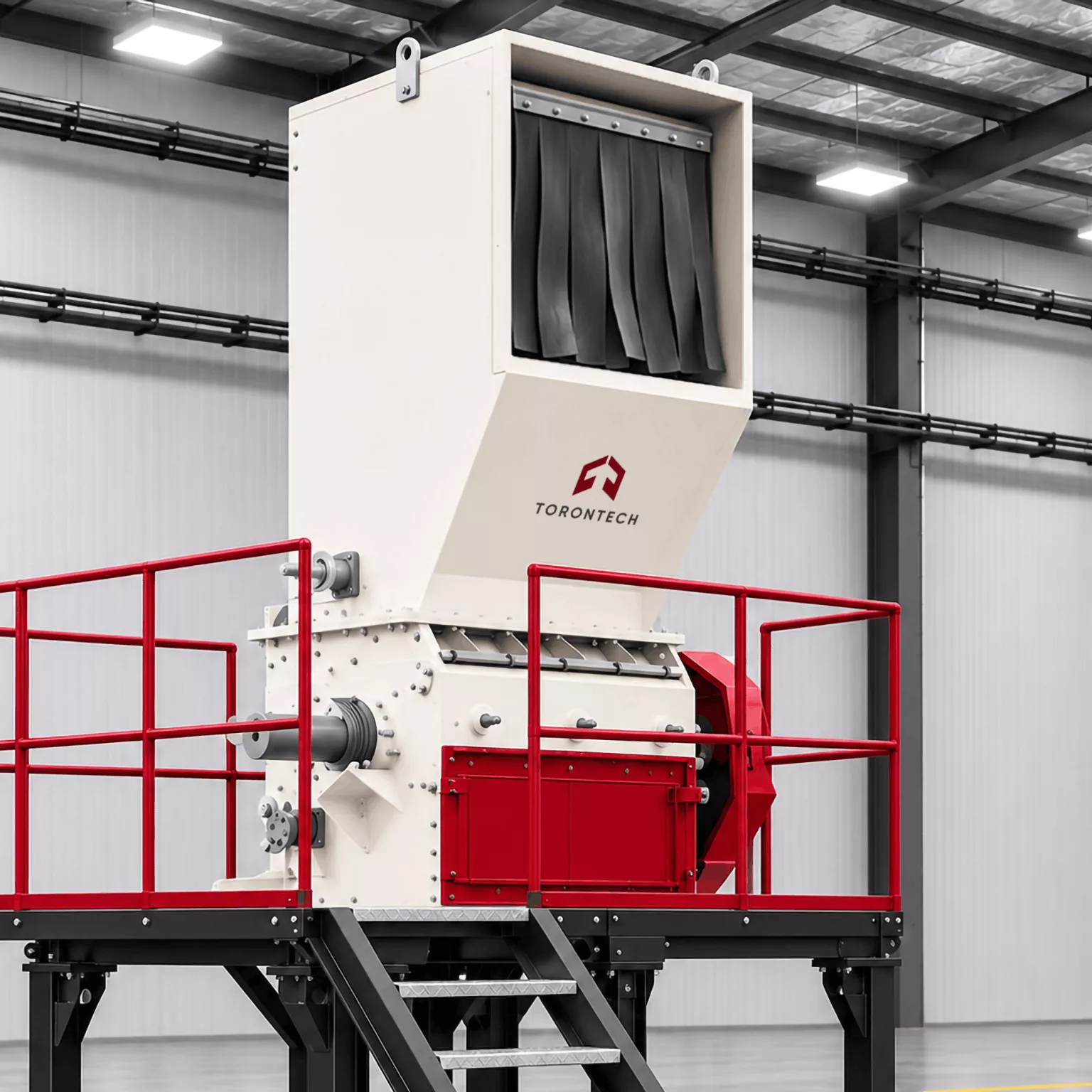
The crusher cuts whole bottles into small, uniform PET flakes. Water flows through the cutting chamber during crushing, cooling the blades and rinsing the flakes as they form. Operators change the outlet sieve mesh to set the flake size their customers require. Torontech selects the crusher model, and the number of crushers, according to the required output capacity of each line.
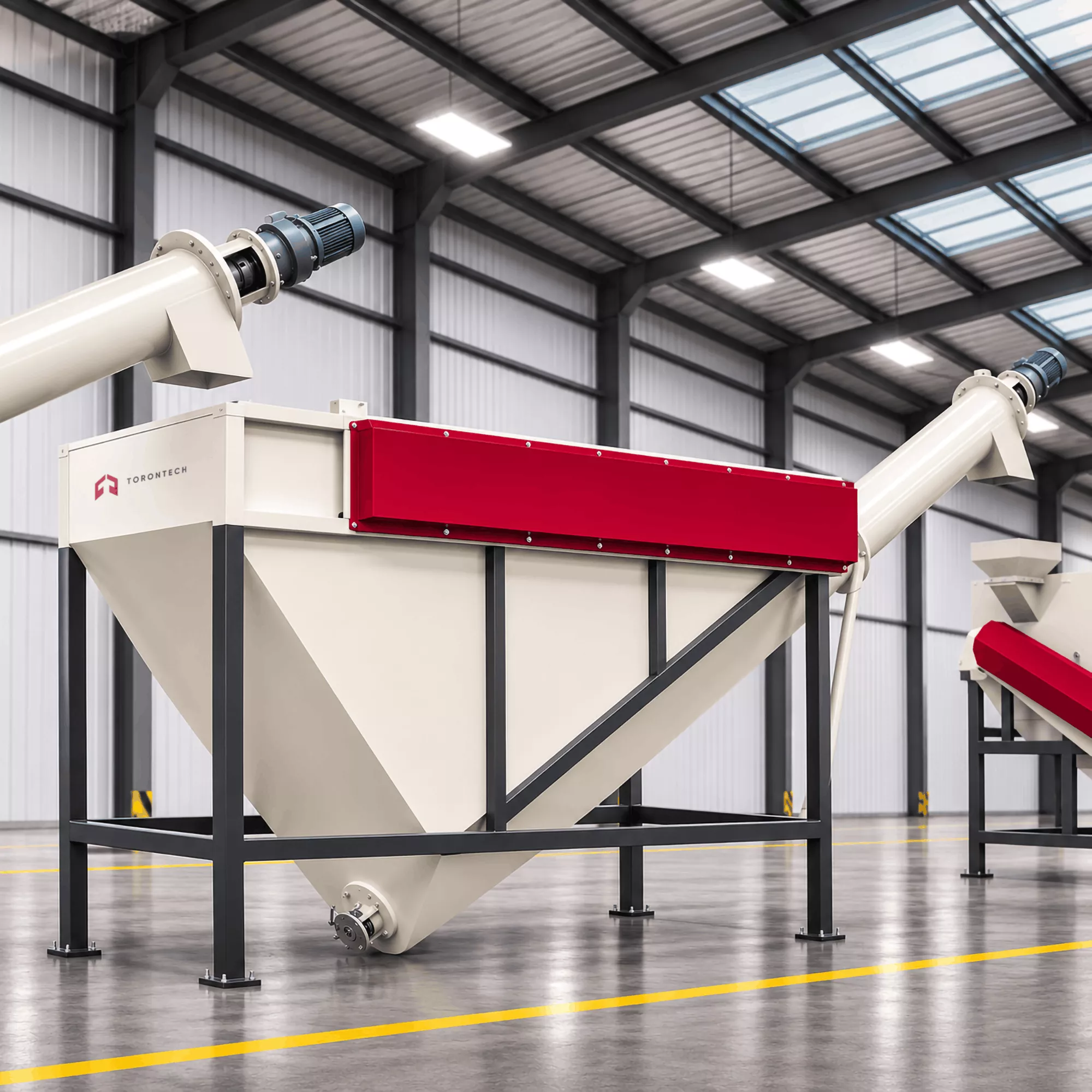
Floating Washer
The floating washer separates PET flakes from lighter contaminants in a long water tank. PET flakes sink to the bottom, where a screw conveyor washes them and carries them toward the discharge end. Caps, rings, floating label film, and residual caustic rise and are removed at the surface. This step recovers clean PET while sending polyolefin cap material out as a separate stream.
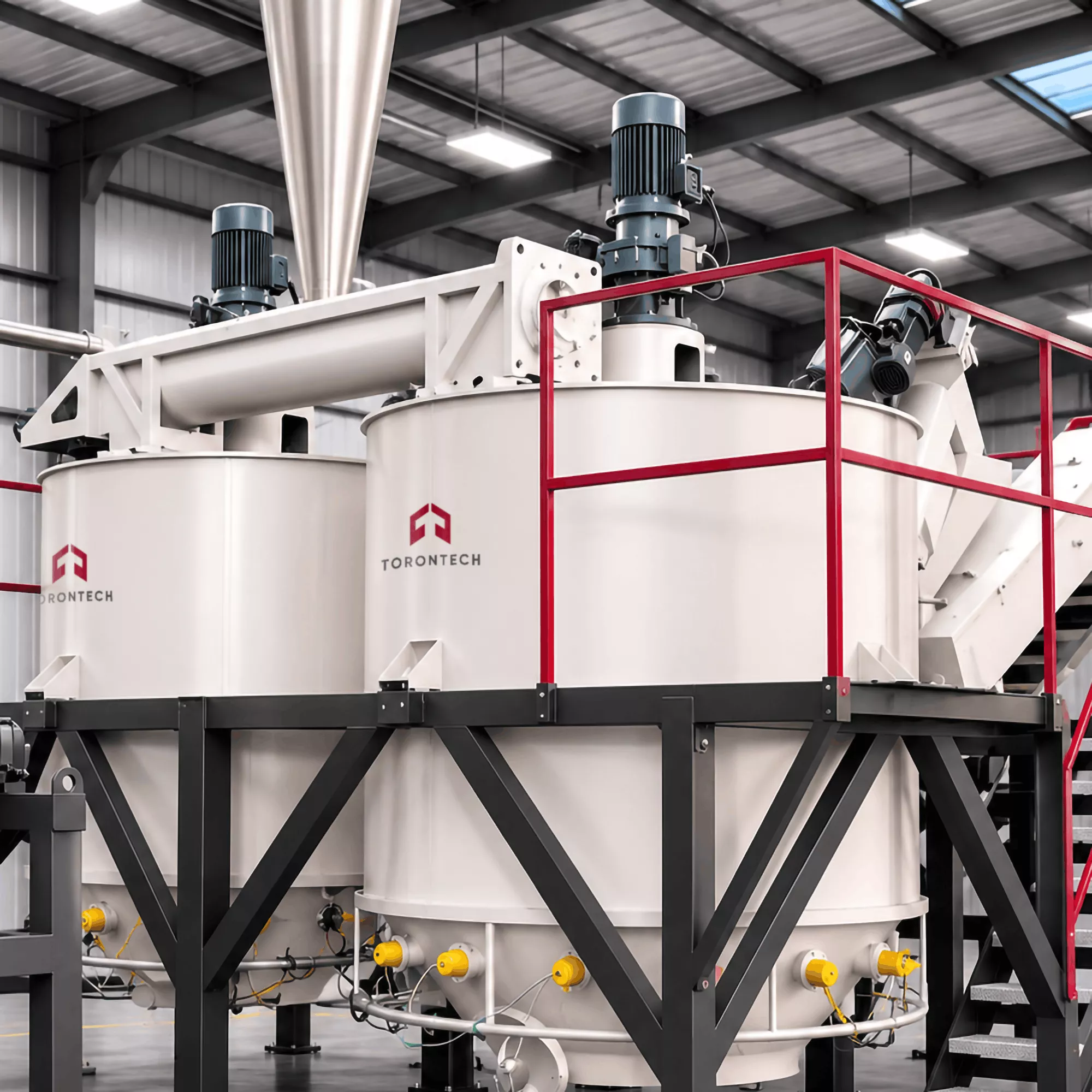
Hot Washer
The hot washer heats its water to 90 to 95 °C and doses caustic soda or detergent into the bath. Agitation keeps the flakes moving through the hot solution, dissolving oil, glue, and stubborn dirt. A dedicated discharge design removes labels and caps that float to the surface during washing. Steam supplies the heat, and consumption scales with line capacity as listed in the specifications.
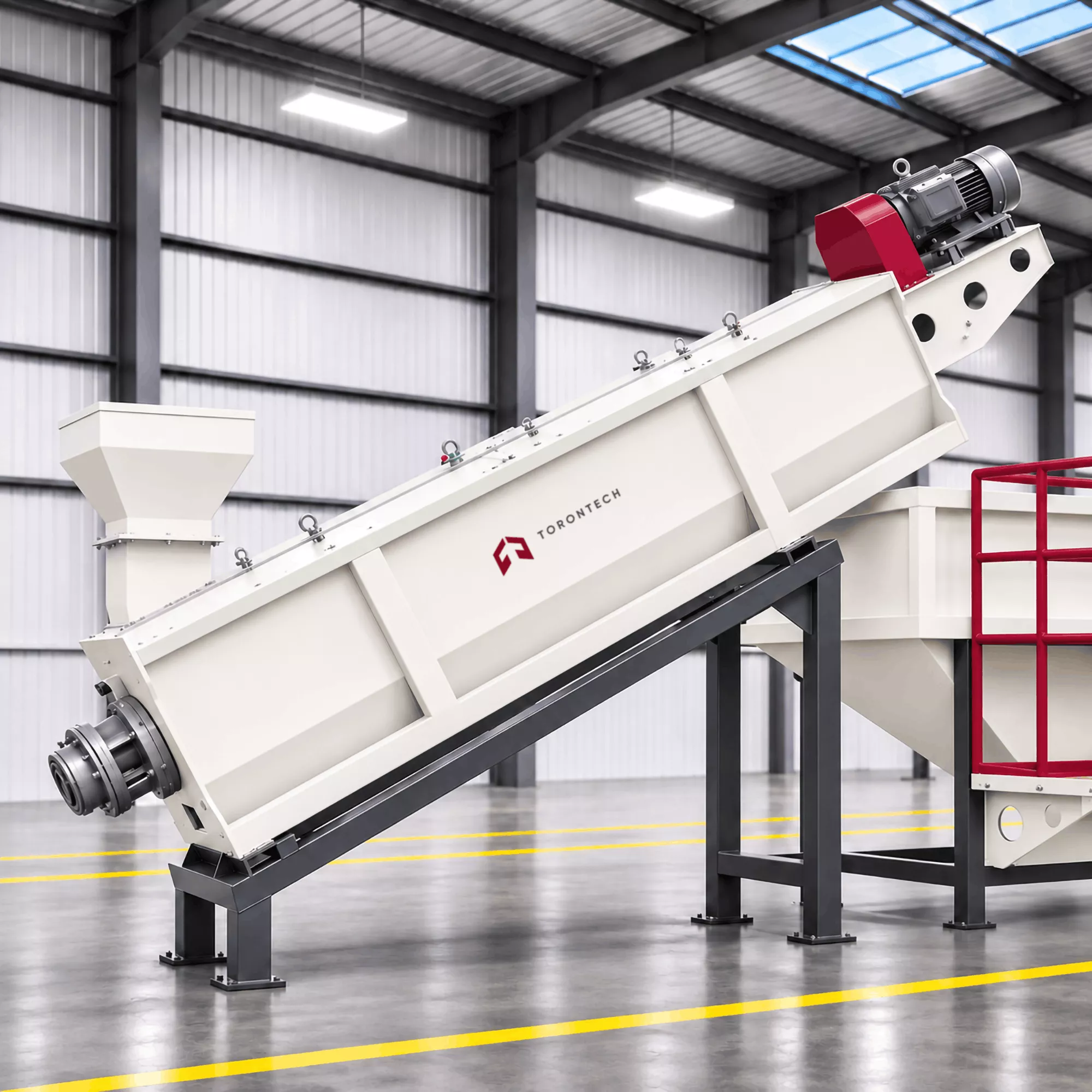
High-Speed Friction Washer
The high-speed friction washer scrubs and rinses flakes after hot washing. A paddle shaft rotates at high speed inside a screen mesh housing while high-pressure water sprays the material. The paddles drive flakes against each other and the screen, removing loosened glue, impurities, and leftover caustic. Chemicals and fines exit through the mesh with the rinse water, and the clean flakes move on to dewatering.
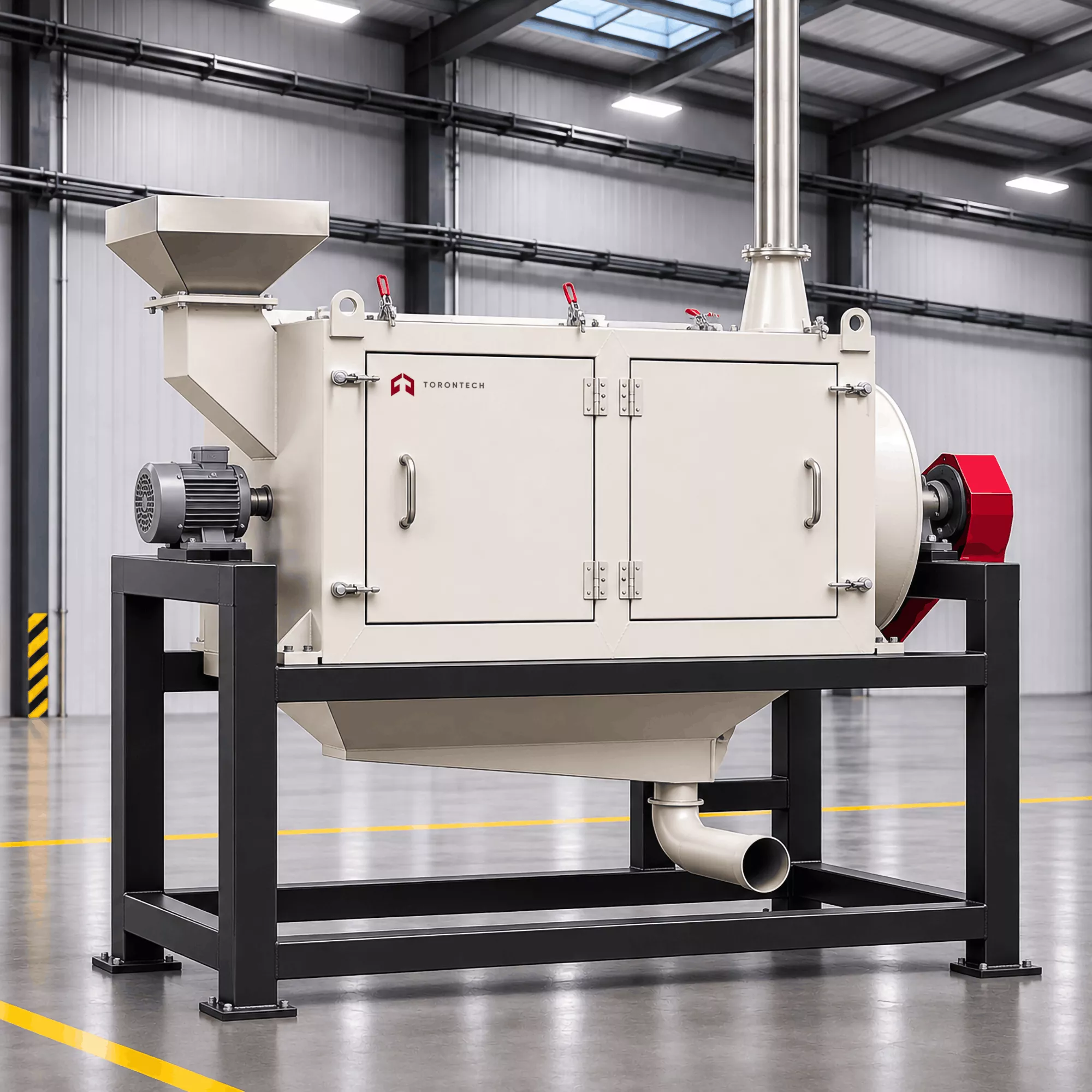
High-Speed Dewatering Machine
The high-speed dewatering machine removes surface water before air separation. A rotor spins at high speed inside a cylindrical screen, creating strong centrifugal force on the wet flakes. That force throws most of the surface water outward through the surrounding mesh. Drier flakes separate more cleanly from labels in the next stage and store without pooling water.
Label Flake Separator
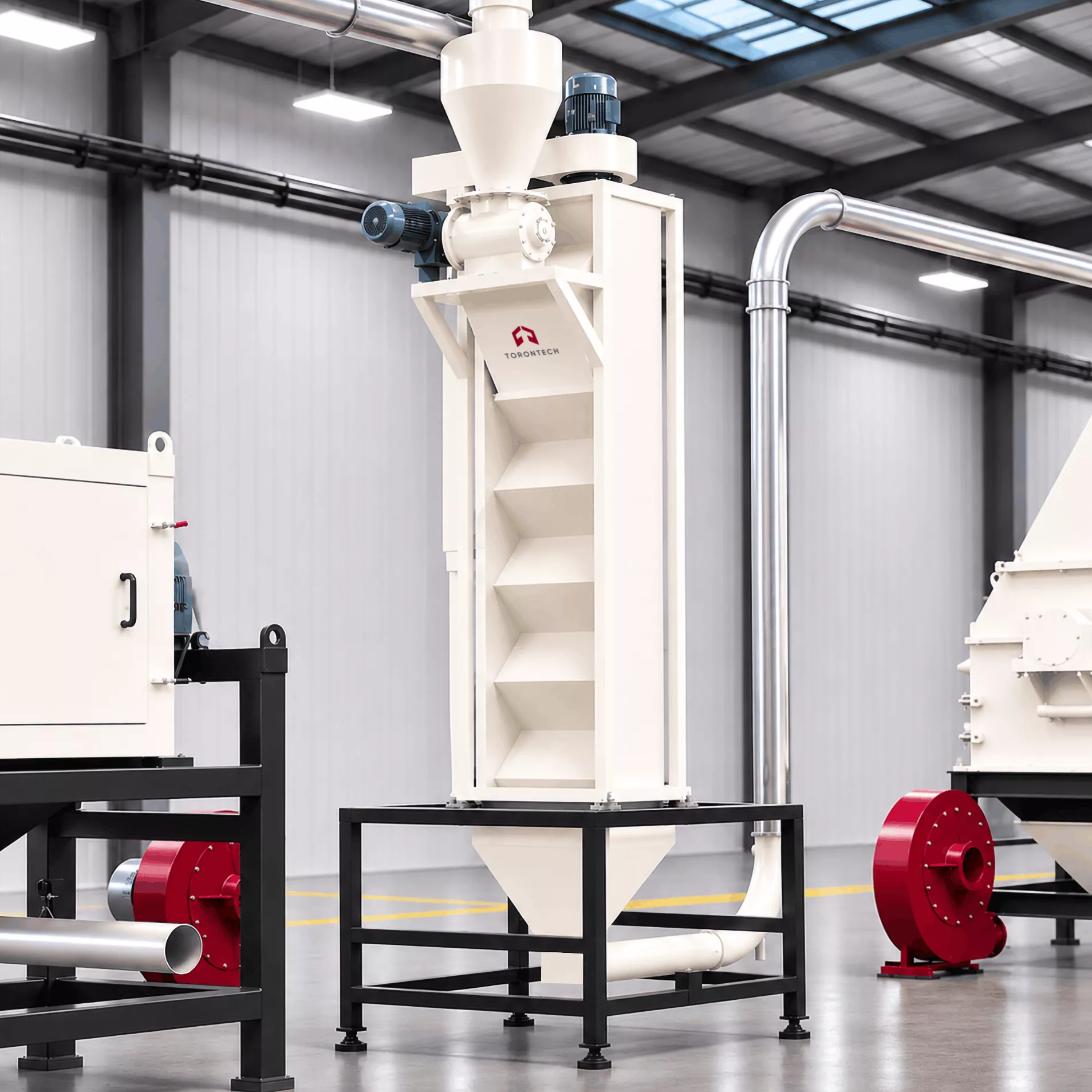
The label flake separator removes the last light contaminants from the dried flakes. A fan at the top of the unit creates suction that pulls label fragments and dust upward into a collection bag. Heavy PET flakes fall to the bottom of the separator and convey to the next machine. This air classification step lifts the purity of the finished flake without adding water or chemicals.
Silo
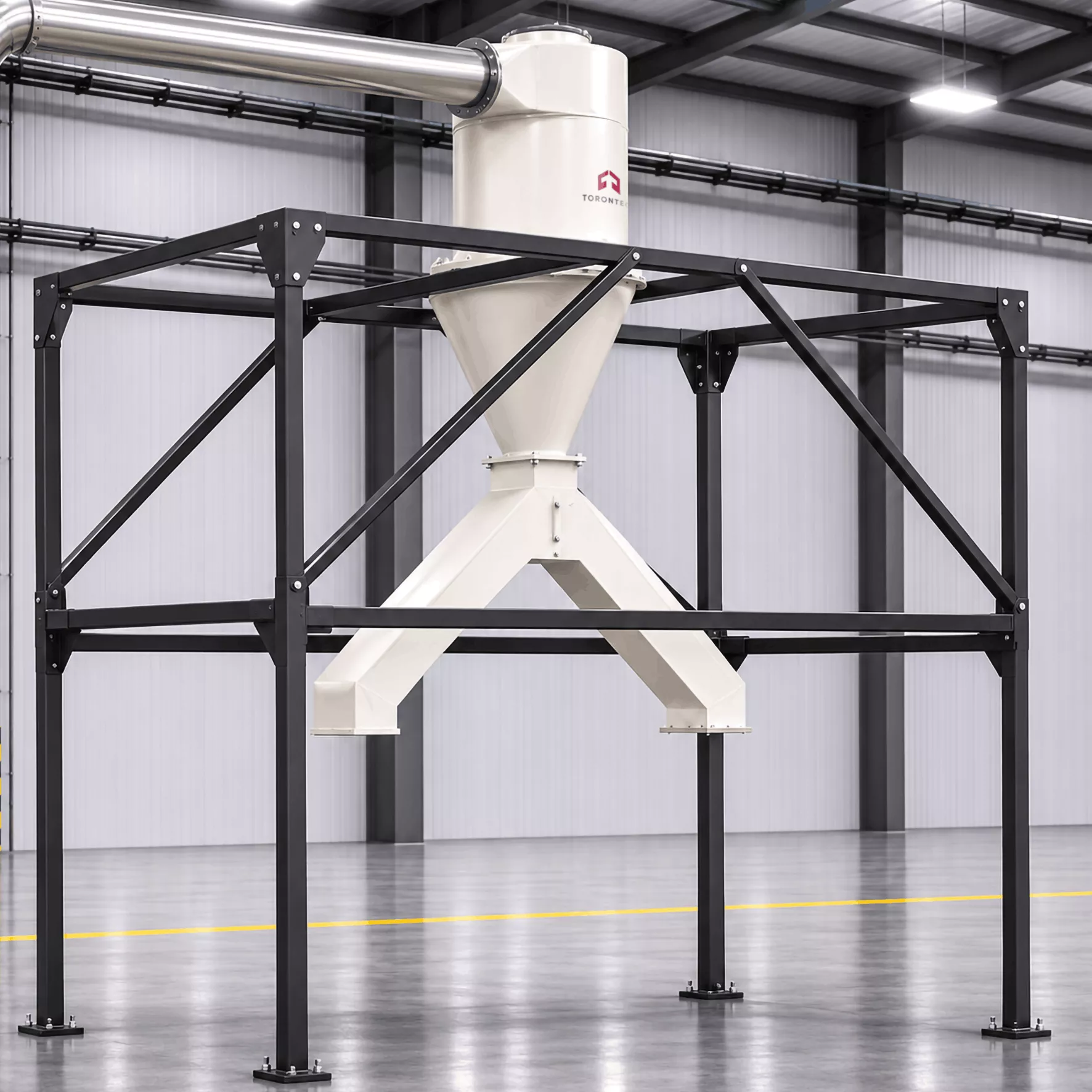
The silo stores finished PET flakes at the end of the line. It buffers output so the washing line can keep running while flakes wait for bagging or transfer to an extruder. Operators can fill bulk bags or feed downstream equipment directly from the silo discharge. This temporary storage keeps production steady during packaging changeovers.
Theory and Method
Density separation splits PET from its most common contaminants. PET has a density near 1.38 g/cm³, so its flakes sink-float separation in water. Bottle caps and rings, usually PE or PP at roughly 0.90 to 0.96 g/cm³, float along with many label films. The floating washer uses this gap: a screw conveys the sinking PET along the tank bottom while operators skim floating caps and labels off the surface.
Hot caustic washing removes the contamination that cold water leaves behind. The hot washer heats water to 90 to 95 °C and doses caustic soda or detergent into the bath. Heat softens label adhesives and lowers the viscosity of oils, while the alkaline solution breaks down glue, grease, and organic residue. A high-speed friction washer then scrubs and rinses the flakes, carrying chemicals and loosened dirt out through its screen.
Air classification provides the final cleanup after centrifugal dewatering. Label fragments are thin and light for their surface area, while PET flakes are thicker and heavier. The label flake separator draws an upward air stream through the falling material, lifting labels and dust into a collection bag. Heavy PET flakes drop through the airflow and discharge cleanly to storage.
PET Bottle Washing Line - ToronPR™ PWL PET Series Technical Specifications
| Parameter | ToronPR™ PWL PET 300 | ToronPR™ PWL PET 500 | ToronPR™ PWL PET 1000 | ToronPR™ PWL PET 2000 | ToronPR™ PWL PET 3000 |
|---|---|---|---|---|---|
| Output Capacity | 300 kg/h | 500 kg/h | 1,000 kg/h | 2,000 kg/h | 3,000 kg/h |
| Total Installed Power | 150 kW | 200 kW | 450 kW | 700 kW | 900 kW |
| Floor Area Required | 350 m² | 650 m² | 1,000 m² | 1,500 m² | 2,400 m² |
| Labor Required | 4-6 workers/shift | 6-8 workers/shift | 8-10 workers/shift | 10-12 workers/shift | 12-14 workers/shift |
| Steam Consumption | 260 kg/h | 320 kg/h | 480 kg/h | 830 kg/h | 1,100 kg/h |
| Water Consumption | 0.5 m³/h | 1 m³/h | 2 m³/h | 4 m³/h | 6 m³/h |
| Hot Wash Temperature | 90-95 °C | 90-95 °C | 90-95 °C | 90-95 °C | 90-95 °C |
| Label Removal Rate (Label Remover) | 90-98% (PVC labels) | 90-98% (PVC labels) | 90-98% (PVC labels) | 90-98% (PVC labels) | 90-98% (PVC labels) |
| Bale Infeed | / | / | Metal chain conveyor | Metal chain conveyor | Metal chain conveyor |
| Process Water | Recyclable with water treatment system | Recyclable with water treatment system | Recyclable with water treatment system | Recyclable with water treatment system | Recyclable with water treatment system |
Parameters are for reference only and may change according to the final line configuration.
