

TGA Sample Preparation: A Complete Guide
From our perspective, a successful TGA analysis doesn't come down to just the instrument. It’s about the crucial steps taken before the analysis even begins. We have consistently seen that the most significant source of questionable data isn't the equipment, but the sample preparation for TGA analysis. Here is our professional take on how to get this right, based on years of helping clients troubleshoot their thermal analysis challenges.
Why Your TGA Sample Preparation Determines Your Data's Quality
The objective of a TGA run is to get a true thermal profile of your material. If the preparation is inconsistent, you're not actually measuring the material's properties; you're measuring the effects of your own inconsistent procedure. A disciplined TGA sample preparation process is what produces clean, repeatable results—the kind of data that supports sound conclusions.
Our Recommended Protocol for TGA Sample Preparation
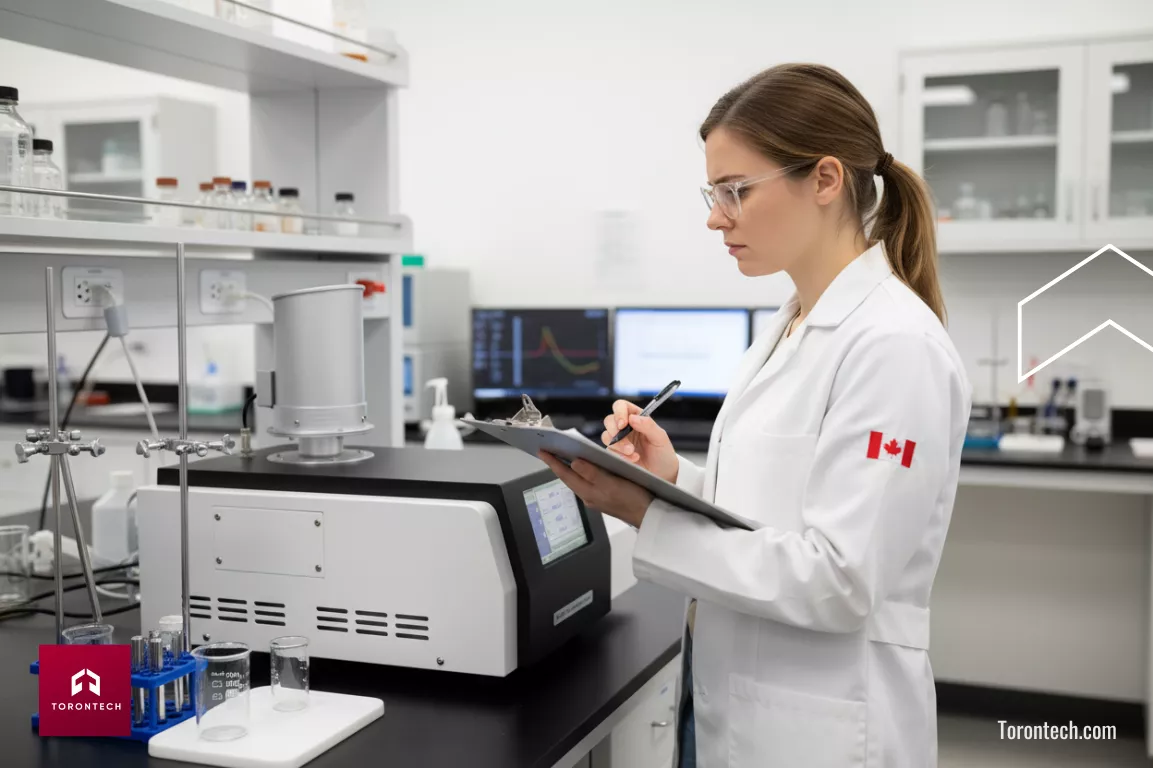 This is the most critical stage for generating high-quality data. A little extra attention here pays huge dividends in the final results. We advise clients to integrate the following four principles into their standard workflow.
Ensure the Sample is Truly Representative
A TGA uses a tiny amount of material to represent a batch that could be kilograms in size. This is a point we can't overstate. If that tiny sample isn't a perfect miniature of the whole, the entire analysis is flawed from the start.
For powders, this may involve taking material from multiple spots in a container and using a technique like coning and quartering to create a homogenous mix. For larger, solid materials, it may require milling a larger piece down and then sampling from that powder. The goal is always to remove any doubt that your sample accurately reflects the bulk material.
Maintain a Clean Environment
Contamination is the enemy of good thermal analysis. It may sound basic, but trace amounts of oils, solvents, or even dust can introduce artifacts into your data, creating small, unexplainable weight loss steps that can send you down a rabbit hole of misinterpretation.
We always recommend handling samples with clean tweezers, not fingers. Work on a clean, non-contaminating surface. And for crucibles, either use a fresh one for each run or ensure they are thoroughly cleaned, often by running a high-temperature burnout cycle in the TGA itself before adding your sample.
Consider the Sample’s Physical Form
The shape and particle size of your sample have a direct impact on heat and mass transfer, which are fundamental to the TGA process. In our experience, a fine, free-flowing powder provides a much clearer result than a single solid pellet. The high surface area of a powder allows for uniform heating and lets any evolved gases escape efficiently.
A solid pellet, by contrast, heats from the outside in, creating a thermal gradient that can smear the decomposition events over a wider temperature range. The only time to use a non-powdered sample is when the original form is part of the study itself.
Select the Proper Crucible
The container holding your sample is an active part of the experiment and can influence the outcome. The choice of material is about more than just temperature limits; it's about chemical compatibility. You want the crucible to be completely inert, meaning it won't react with your sample or any gases it produces.
A well-designed instrument, like our ToronTGA, helps by ensuring the crucible is optimally positioned run after run, but the initial material choice is a critical decision that rests with the analyst.
A Practical Guide to Choosing Your Crucible
We frequently consult with clients on crucible selection. Here is the straightforward guide we provide:
| Crucible Material | Temperature Limit | Primary Applications |
| Aluminum | ~600 °C | Polymers and organic materials. An excellent, cost-effective choice for routine work. |
| Alumina (Ceramic) | ~1600 °C | Appropriate for inorganic materials, metals, and analyses at very high temperatures. |
| Platinum | ~1500 °C | The premium choice. Ideal for nearly all applications, especially with corrosive samples. |
3 Common Oversights in Sample Preparation for TGA Analysis
Knowing the correct procedure is one thing; knowing the common pitfalls is another. Here are the frequent, costly errors we help our clients avoid.
Inconsistent Sample Mass
We have seen entire comparison studies invalidated because the sample weight required for TGA was not consistent between runs. Our recommendation is to use a calibrated microbalance and adhere to a strict target mass (e.g., 5.0 mg ± 0.2 mg) for every analysis in a series.
Using a Non-Uniform Sample
A clumpy or pelletized sample will produce a broad, poorly defined thermal curve. For instance, analyzing a whole polymer pellet often shows a slow, drawn-out weight loss. Grinding that same pellet into a fine powder will typically result in a much sharper, more defined decomposition step at a slightly lower temperature.
Our recommendation is that unless the material’s original form is part of the study, gently grind it into a fine, uniform powder. The improvement in data quality is significant.
Allowing Sample Contamination
We have seen TGA curves thrown off by everything from absorbed atmospheric moisture to oils from handling. Our recommendation is to always manage samples with clean tweezers and use crucibles that have been properly tared or cleaned with a high-temperature cycle.
Related article: Best Practices for TGA Calibration: A Pro Guide
How Much Sample is Needed for TGA?
This is a very common question. When asking how many sample is needed for TGA, the ideal range for most materials, particularly polymers, is between 5 and 10 milligrams. This amount is large enough to be representative, but small enough to avoid the thermal gradient issues that can occur with larger samples. The minimum sample amount for TGA can be much lower, but that presents its own challenges.
The Challenge of Doing TGA with a Small Amount of Sample
In specialized fields like pharmaceutical development, doing TGA with a small amount of sample is a frequent necessity. This presents two distinct challenges: ensuring that tiny amount is truly representative, and having an instrument with sufficient sensitivity to provide a clear signal. This is where the quality of your analyzer is put to the test.
We developed our ToronTGA series with a high-precision balance precisely because we know our clients often have only one opportunity to analyze an irreplaceable sample.
Different TGA Behaviours of Identical Samples with Different History
Here is a fascinating variable to consider. It is possible to see different TGA behaviours of identical samples with different history. The reason is that their storage and processing conditions can differ. Exposure to humidity or mechanical stress can create subtle structural changes. A classic example of this principle involves hygroscopic materials like nylon powder. Two batches of the exact same powder can show different results.
One batch might show a small but distinct weight loss around 100°C that the other doesn't. The variable is often storage: one batch was left in a humid environment, where it absorbed atmospheric moisture, while the other was kept in a desiccator. It’s a perfect illustration of why a consistent preparation and storage protocol is so vital for producing comparable data.
Cost-Effective TGA Solutions by Torontech
Our focus at Torontech has always been to provide high-performance laboratory equipment that makes good financial sense. We believe getting clean, trustworthy TGA results should be an accessible goal. When you standardize your TGA sample preparation technique, our ToronTGA analyzers will deliver the dependable performance you need.
If you are looking to improve the reliability of your thermal analysis, let's discuss your application. Contact our team of specialists for a personalized quote, and we will be happy to show you how our cost-effective solutions can help you achieve your objectives.
Want More Reliable TGA Results?
References:
- Xianzhe, D., Nan, L., Yuyuan, W., & Zhenping, T. (2022). Systematical Study on the Influencing Factors of Synchronous Thermal Analyses of Samples-Taking the Chalcanthite as an Example. Frontiers in Chemistry, 10. doi.org/10.3389/fchem.2022.863083
- Čović, A., & Vrandečić, S. (2021). Influence of poly(ethylene oxide) sample preparation on the results of thermogravimetric analysis. St open. doi.org/10.48188/so.2.5
- Coats, A., & Redfern, J. (1964). Kinetic Parameters from Thermogravimetric Data. Nature, 201, 68-69. doi.org/10.1038/201068A0
- Saadatkhah, N., Garcia, A., Ackermann, S., Leclerc, P., Latifi, M., Samih, S., Patience, G., & Chaouki, J. (2019). Experimental methods in chemical engineering: Thermogravimetric analysis—TGA. The Canadian Journal of Chemical Engineering. doi.org/10.1002/cjce.23673
- Martincic, M., Sandoval, S., Oró-Solé, J., & Tobías-Rossell, G. (2024). Thermal Stability and Purity of Graphene and Carbon Nanotubes: Key Parameters for Their Thermogravimetric Analysis (TGA). Nanomaterials, 14. doi.org/10.3390/nano14211754
